

Quick Summary
Oral peptide delivery faces seven main challenges that limit how much of a dose reaches the bloodstream. Digestive enzymes break peptides apart, stomach acid destabilizes them, and the intestinal lining, mucus and tight junctions block passage. Formulation strategies can address each barrier, but each comes with trade-offs.
- Pepsin and intestinal proteases such as trypsin and chymotrypsin cut peptides apart along the digestive tract.
- Peptides above roughly 1,000 Da are generally considered poor candidates for passive absorption.
- Because much of the dose is lost before absorption, oral products often need higher doses than injectables.
- Caco-2 permeability assays can overstate or understate real absorption, so read them alongside stability and mucus data.
- Sublingual and buccal routes can bypass much of the gut's enzymatic breakdown, but only a small set of peptides absorb well this way.
Table of Contents
- 1. Enzymatic Degradation by Gastric and Intestinal Proteases
- 2. Peptide Instability in Gastric Acidity and Low pH
- 3. Limited Permeability Across the Intestinal Epithelium
- 4. Mucus Barriers and Intestinal Tight Junctions
- 5. Oral Formulation Strategies: Protecting the Peptide
- 6. Dose Burden, Variability and Food Effects
- 7. Sublingual Peptides and Where Buccal Delivery Fits
- Choosing an Oral Peptide Option: Next Steps for Your Own Decision
- Frequently Asked Questions
1. Enzymatic Degradation by Gastric and Intestinal Proteases
Oral peptide delivery starts with a hostile environment. Peptides are chains of amino acids, and the digestive tract is built to break exactly those chains apart. Once a peptide swallowed as a strip or capsule reaches the stomach, pepsin begins cutting it at specific bonds, and the small intestine adds trypsin, chymotrypsin and other proteases that finish the job.
Enzymatic breakdown is often the first challenge in oral peptide development, and it is one of the most visible in early testing. Protease activity is not uniform across the tract, so a peptide that survives the stomach can still be destroyed in the duodenum.
Watch out: a peptide that looks stable in a buffer solution at room temperature can degrade quickly once it meets intestinal enzymes. Stability data should always be gathered in conditions that resemble the gut.
2. Peptide Instability in Gastric Acidity and Low pH
The stomach runs at a very low pH, and that acidity does more than activate digestive enzymes. It can also cause peptides to unfold, aggregate, or undergo chemical changes such as deamidation and hydrolysis. A peptide's structure often determines how well it tolerates this stress, so two peptides of similar length can behave very differently.
A common approach is to test stability across a pH range that mirrors the gastric-to-intestinal transition.
3. Limited Permeability Across the Intestinal Epithelium
Surviving the gut is only half the problem. The peptide also has to cross the intestinal epithelium to reach the bloodstream, and that lining is a selective barrier rather than a passive sieve. Most peptides are too large, too polar, or too charged to cross it efficiently, which is why oral bioavailability for unmodified peptides is typically low and why permeability is often the rate-limiting challenge in an oral program.
The Two Routes Across the Epithelium
A peptide can cross the intestinal wall by one of two broad routes, and each has hard limits.
- Transcellular transport requires the molecule to partition into and through the lipid membrane of an epithelial cell. This favors small, relatively lipophilic molecules. Peptides are generally hydrophilic and carry net charge, so they partition poorly into the membrane, and large peptides cannot traverse the cell at all by simple diffusion.
- Paracellular transport passes between cells through the tight junctions that seal the epithelial layer. These junctions are size- and charge-selective and normally admit only small molecules, so a peptide of typical therapeutic size is largely excluded unless the junctions are opened by an absorption enhancer.
A third route, receptor-mediated transcytosis, exists for a small number of ligands and is an active area of peptide engineering, but it is not a general solution and depends on the peptide carrying the right targeting motif.
How Molecular Size, Polarity and Charge Limit Passage
Molecular weight, hydrophilicity and net charge each shape how easily a peptide crosses the lining.
- Size: permeability falls steeply as molecular weight rises. Peptides above roughly 1,000 Da are generally considered poor candidates for passive absorption.
- Polarity: a high number of hydrogen-bond donors and acceptors makes a peptide reluctant to enter the lipid bilayer. Reducing polar surface area, for example by masking backbone amides, is a common engineering tactic.
- Charge: a high net charge, positive or negative, impedes membrane passage and can also promote binding to mucus and to serum proteins. Charge modification changes permeability but may also change receptor binding and immunogenicity.
Understanding these properties before formulation helps teams choose which barrier they are actually fighting. A peptide that fails on size will not be rescued by a permeation enhancer alone, whereas a smaller, moderately lipophilic peptide may respond well to one.
Why This Matters for Dose and Enhancer Choice
Because only a fraction of the administered peptide crosses the epithelium, oral products often need substantially higher doses than the equivalent injectable. That raises cost, increases exposure of the gut to excipients, and amplifies variability. It also shapes enhancer strategy: paracellular enhancers that open tight junctions are most useful for peptides that are otherwise blocked by size, while transcellular enhancers or lipid-based carriers suit peptides that can be made more lipophilic.
Watch out: permeability measured in a standard Caco-2 assay can overstate or understate real absorption, because the assay does not reproduce the mucus layer, the full tight-junction complexity, or the enzymatic environment of the intestine. Permeability data should be read alongside stability and mucus data, not in isolation.
4. Mucus Barriers and Intestinal Tight Junctions
Two more physical barriers sit between the peptide and absorption. The mucus layer coating the intestine can trap molecules and slow their contact with the epithelial surface. Beneath it, tight junctions between epithelial cells seal the gaps, allowing only very small molecules to pass between cells.
Mucus binding can reduce effective dose even when enzymatic protection is strong, so addressing one barrier while ignoring the others can limit results.
5. Oral Formulation Strategies: Protecting the Peptide
Formulation is where most of the engineering effort goes, and the right choice depends on which of the earlier barriers is dominant for a given peptide. The strategies below are not interchangeable; each addresses a specific barrier and carries its own limitations.
Enteric and pH-Responsive Coatings
An enteric coating keeps the capsule intact through the acidic stomach and releases the peptide at the higher pH of the small intestine. This protects against gastric acid and against pepsin, but it does not protect against intestinal proteases, and release timing can vary with gastric emptying and food. A pH-responsive coating adds a trigger for release, but the trigger depends on local pH, which itself varies along the tract and between patients.
Protease Inhibitors
Co-formulating protease inhibitors can reduce enzymatic breakdown in the intestinal lumen. The trade-off is that these inhibitors are not selective for digestive enzymes, so they can affect other proteases in the body and raise safety questions for chronic use. They also add an excipient that must be reviewed and characterized.
Permeation Enhancers
Enhancers open tight junctions or increase membrane fluidity to improve absorption. They can substantially raise bioavailability for the right peptide, but they act on the epithelial barrier itself, so local irritation, reversibility, and tolerability are central concerns. The effect is also dose- and formulation-dependent, and an enhancer that works in one region of the gut may not work in another.
Carrier Systems
Encapsulation in lipid, polymer, or nanoparticle carriers can protect the peptide from enzymes and mucus, and in some designs improve uptake across the epithelium. Manufacturing complexity, scale-up, and stability of the carrier are the main trade-offs, and carrier performance often depends on the peptide's size and charge.
Chemical Modification and Peptide Engineering
Modifying the peptide itself, for example by cyclization, backbone modification, or attachment of lipid or polymer chains, can improve stability and permeability. These changes can also alter receptor binding, half-life, and immunogenicity, so they are usually evaluated alongside the formulation rather than instead of it.
Matching Strategy to Barrier and Development Stage
A practical way to read the options is to pair each barrier with the strategies that address it and the trade-off that matters most at that stage.
| Challenge | Common Mitigation Strategy | Main Trade-off |
|---|---|---|
| Enzymatic degradation | Protease inhibitors, enteric coating | Added excipient safety review |
| Gastric acidity | Enteric or pH-responsive coating | Release timing can vary |
| Low permeability | Permeation enhancers, chemical modification | Possible epithelial irritation |
| Mucus barrier | Mucoadhesive or mucus-penetrating carriers | Inconsistent adhesion |
| Tight junctions | Absorption enhancers | Reversibility and tolerability |
| Size and polarity | Lipid or polymer encapsulation | Manufacturing complexity |
Early-stage programs often start with the simplest protection that addresses the dominant barrier, then add complexity only when data show it is needed. Later-stage programs have to weigh the same trade-offs against chronic-use safety, manufacturing scale, and regulatory expectations.
Watch out: a formulation that improves stability in one assay can reduce permeability or change release in another, so formulation choices should be tested against the full set of barriers rather than a single stability endpoint.
6. Dose Burden, Variability and Food Effects
Because so much of the dose can be lost before absorption, oral products often need higher doses than injectables. That raises cost, increases the amount of excipient the body handles, and makes results harder to predict. Food adds another layer: a meal changes gastric emptying, pH and enzyme levels, so the same dose can yield different absorption depending on when it is taken.
7. Sublingual Peptides and Where Buccal Delivery Fits
Sublingual and buccal routes avoid much of the gut entirely. Tissue under the tongue and inside the cheek can bypass much of the digestive tract's enzymatic breakdown.
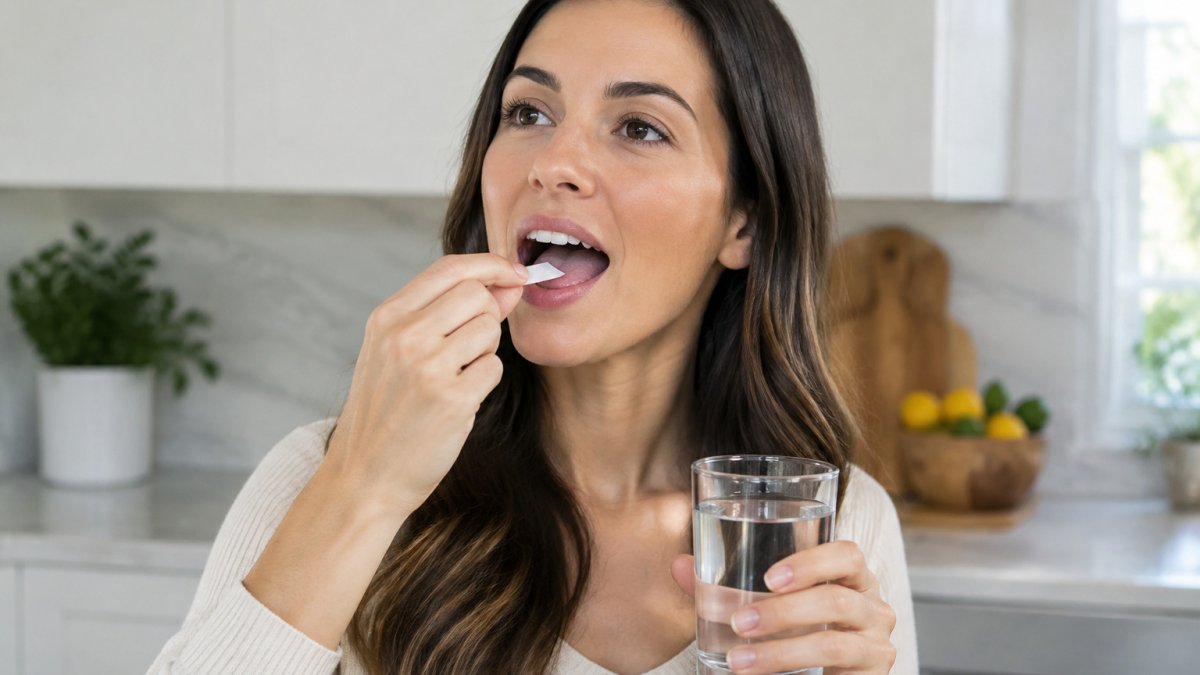
The route still has limits. Only a small set of peptides absorb well through oral mucosa, and the dose that can be carried in a thin strip is constrained. For readers exploring this option, our sublingual peptide range shows which products are formulated for this route, and our oral dissolving strip collection lists the buccal-release products currently available.
Choosing an Oral Peptide Option: Next Steps for Your Own Decision
Oral peptide delivery is a set of connected barriers, and no single fix solves all seven. Start by identifying which challenge most affects the peptide you are considering, then compare mitigation strategies against their trade-offs rather than against marketing claims.
Regulatory status also matters, since oral peptide products are subject to changing rules. Before deciding, review the legal and compliance landscape for oral peptide therapy and, if you are ready to move forward, contact our team with specific questions about your options.
Last Updated: November 24, 2026
Frequently Asked Questions
Do orally ingested peptides work?
Some do, but most orally ingested peptides face substantial barriers. Digestive proteases break peptide bonds in the stomach and small intestine, stomach acid alters their structure, and the intestinal lining is poorly permeable to molecules of their size and charge. Oral bioavailability is therefore typically low and variable. Whether a given peptide works orally depends on its sequence, its size and charge, and whether the formulation protects it long enough to reach the absorptive surface. Products that claim oral activity should be judged on the evidence for absorption and effect in their specific form, not on general assumptions.
Why are peptides difficult to deliver orally?
Peptides are chains of amino acids that are large, polar and often charged, which makes them unstable and poorly absorbed in the gut. Proteolytic enzymes such as pepsin, trypsin and chymotrypsin cleave them, gastric acidity can denature them, and the epithelium restricts passage through both transcellular and paracellular routes. Each of these challenges compounds the others, so a peptide that survives digestion may still reach the bloodstream in very small amounts. That is the core reason oral peptide delivery remains a formulation problem.
Are sublingual peptides absorbed differently from swallowed peptides?
Sublingual and buccal administration bypass the stomach and much of the digestive enzyme load, so the peptide reaches the mucosal surface of the mouth directly. The oral mucosa is thinner and more permeable than the intestinal wall in some respects, but it is also limited in surface area and in how much fluid is available to dissolve and carry a dose. Absorption through the mouth is generally more predictable than swallowed absorption, though it still depends on the peptide's size, charge and the dissolution behaviour of the formulation.
What affects the oral bioavailability of peptides?
Oral bioavailability of peptides depends on enzymatic stability, gastric pH, intestinal permeability, molecular size and charge, mucus binding, food and gastric emptying, and the formulation used. Peptides with low molecular weight, favorable charge profiles and resistance to proteases generally fare better. Formulation approaches such as enteric coatings, permeation enhancers and carrier encapsulation can raise bioavailability, but each adds trade-offs in safety, cost and manufacturing complexity that must be weighed case by case.
