

Quick Summary
Sublingual peptides are peptide compounds delivered as thin oral dissolving strips placed under or on the tongue, offering a needle-free alternative to injectable vials. The best choice depends on your goal, such as recovery with BPC-157, antioxidant support with glutathione, energy with NAD+, or sleep with the DSIP blend.
- Strips skip reconstitution, syringes, and injections, which is the main appeal over vials.
- BPC-157 Rebuild strips deliver 500 mcg each, taken 5 days on and 2 days off for 8 to 12 weeks.
- Glutathione Vitality strips provide 80 mg with 20 mg N-Acetyl Cysteine, taken once daily in 12-week cycles.
- The SLEEP DSIP blend is priced at $99.00 and contains only DSIP as a peptide.
- Consult a licensed clinician before starting, especially if you take prescription medication.
Table of Contents
- What Sublingual Peptides Are and How They Differ From Injectable Vials
- How Sublingual Peptide Absorption Works in Practice
- The InstaMed Sublingual Peptide Lineup, Product by Product
- How to Use a Peptide Strip Step by Step
- Peptide Strip Safety and Side Effects to Discuss With a Clinician
- Peptide Therapy Side Effects and Medication Interactions
- Choosing Your First Peptide Strip and Starting This Week
- Frequently Asked Questions
What Sublingual Peptides Are and How They Differ From Injectable Vials
Last Updated: November 22, 2026
Sublingual peptides are peptide compounds delivered in a thin oral dissolving strip that you place under or on the tongue, where the tissue absorbs them directly. This format is a needle-free alternative to the injectable vials most people encounter first. The practical difference is the delivery route, not the molecule itself.
Injectable vials require reconstitution with bacteriostatic water, a syringe, and a subcutaneous or intramuscular injection. Strips skip every one of those steps. For many people who have grown tired of needles, that alone is the deciding factor.
The trade-offs are real.
How Sublingual Peptide Absorption Works in Practice
The practical variables are contact time, saliva flow, and how completely the strip dissolves.
Most product labels instruct you to place the strip on the tongue, let it dissolve completely without chewing, and then swallow. Following that sequence matters more than any general tip, because the strip needs sustained contact with the oral tissue to release its contents.
Timing and consistency also affect the routine. Dosing schedules differ by product, so the label is the reference point. A common pattern is to take the strip at a consistent time of day, with a clear mouth, avoiding food or drink immediately before and after, so the conditions repeat each time. Some products list a cycle structure on the label, and following that structure is what the instructions call for.
Stick to the stated daily or cycle dose on the label.
The InstaMed Sublingual Peptide Lineup, Product by Product
InstaMed sells several strip formulas. Each one is listed below with the details from its product listing, so you can compare them on the same basis.
Recovery and Repair: BPC-157 and Glutathione Options
Rebuild - BPC-157 is the InstaMed option for readers interested in recovery and tissue support. The listing describes BPC-157 as a peptide studied for healthy tissue response and normal healing functions, delivered at 500 mcg per strip. The recommended schedule is 5 days per week with 2 days off, in an 8 to 12 week cycle. Price is $178.00.
Vitality - Glutathione is the alternative for readers comparing antioxidant support. You can see the Vitality glutathione product and evaluate it on its own page. The listing describes glutathione as the body's master antioxidant, supplied at 80 mg per strip with 20 mg of N-Acetyl Cysteine. Use is one strip daily in 12 week cycles. Price is $124.00.
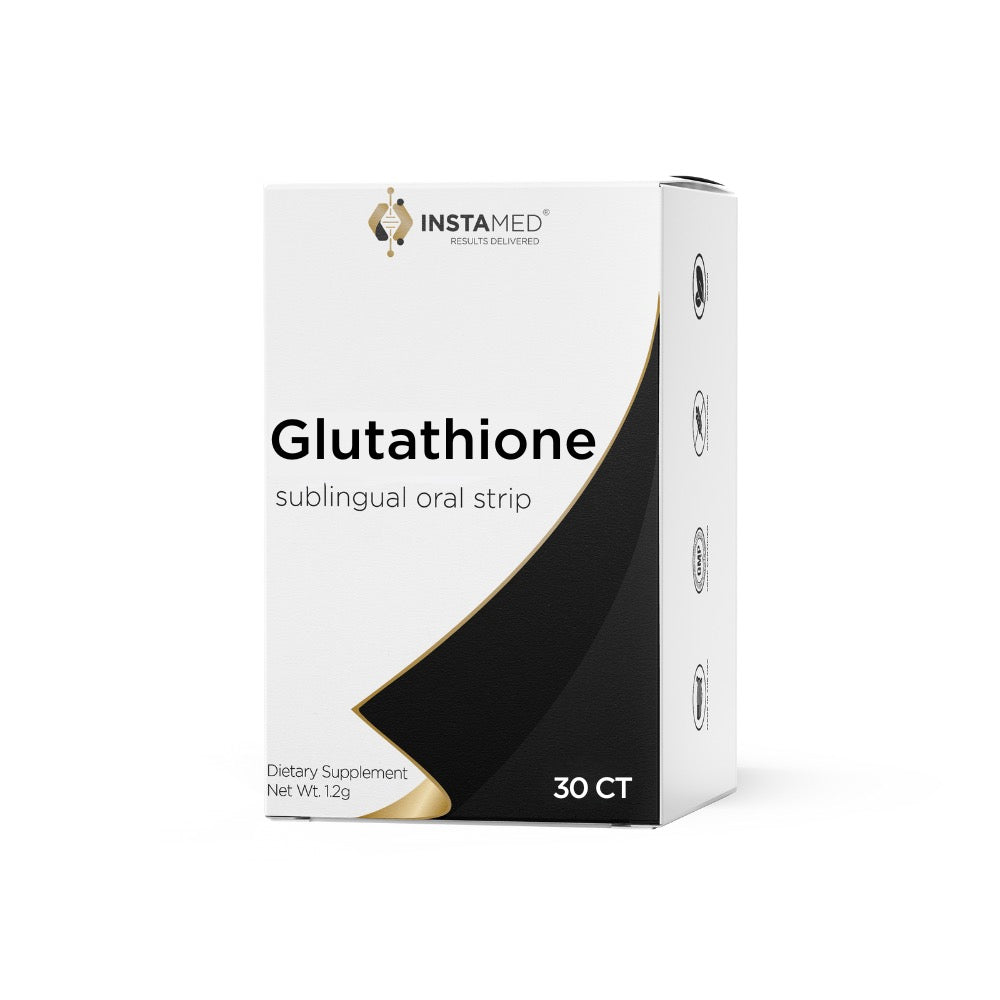
Choose BPC-157 if your interest is recovery-focused, and glutathione if your interest is antioxidant or skin-related support. The two serve different purposes, so they are not interchangeable.
Energy, Sleep and Focus: NAD+, Semax/Selank and DSIP Blend
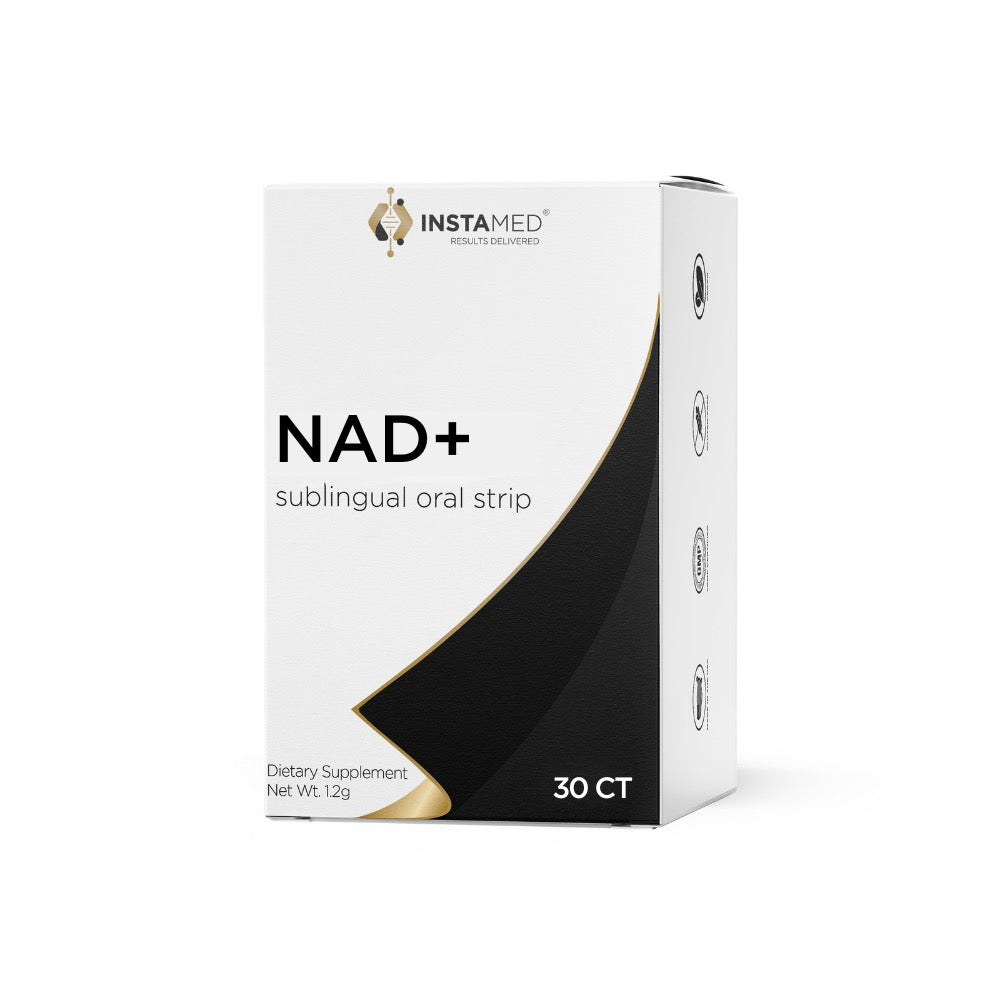
Energy - NAD+ delivers 100 mg of NAD+ per strip, dosed at one strip daily in 12 week cycles. You can view the NAD+ strip, its form, and dosing on the product page. The listing covers cellular energy and mental clarity. Price is $133.00.
NEURO - Semax/Selank pairs two synthetic neuropeptides. The listing describes it as a focus and calm combination, with one strip taken for 5 days followed by 2 days off each week. Price is $206.00.
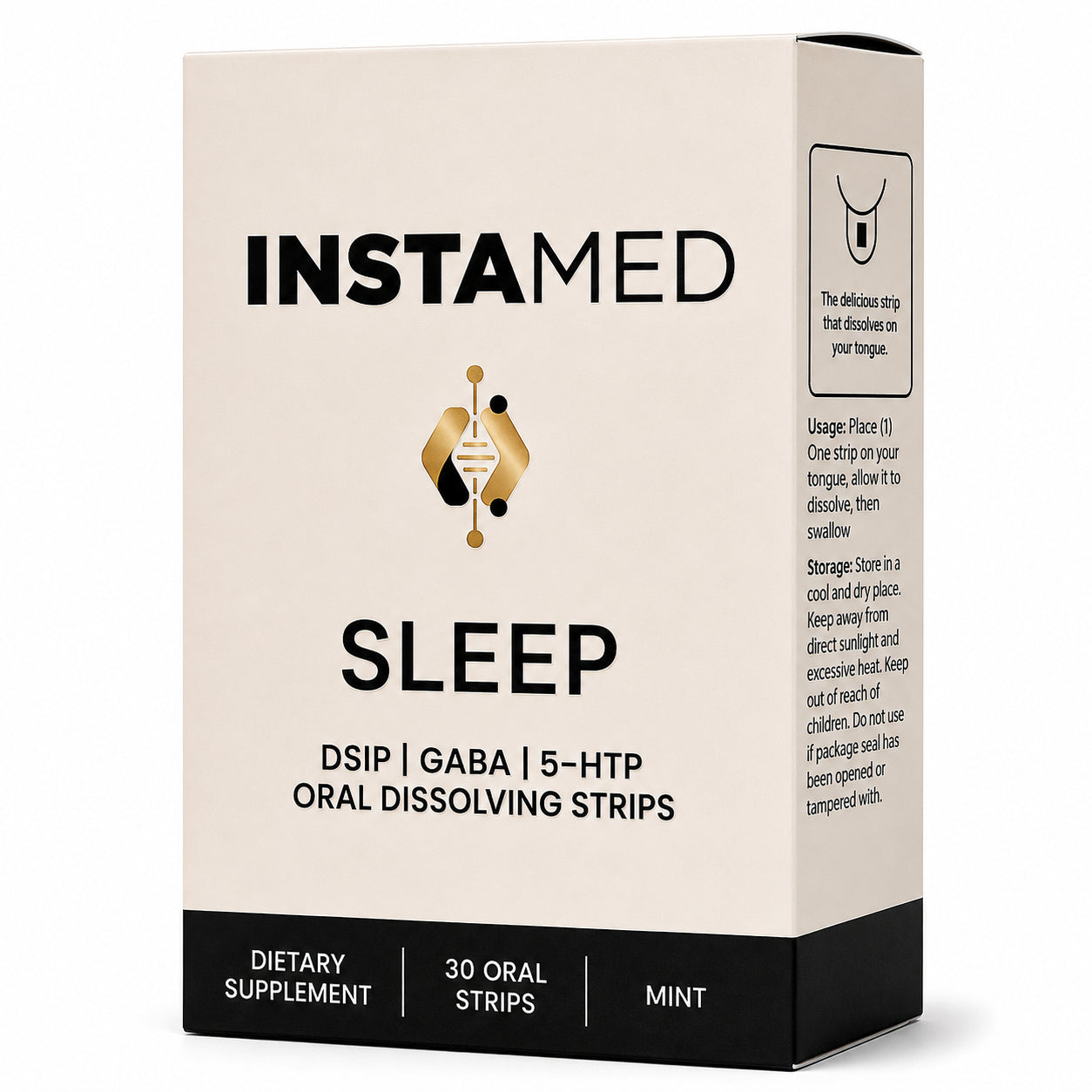
SLEEP - DSIP + GABA + 5-HTP is a three-pathway blend rather than a single peptide. You can view this DSIP sleep formula and its ingredients on its product page. Only DSIP is a peptide; GABA and 5-HTP are included as supporting ingredients. One strip is taken daily as needed. Price is $99.00.
The article's product listings can be compared side by side using the figures each listing states.
| Product | Price | Dose and schedule |
|---|---|---|
| Rebuild - BPC-157 | $178.00 | 500 mcg per strip, 5 days on, 2 off, 8-12 weeks |
| Vitality - Glutathione | $124.00 | 80 mg per strip, one daily, 12-week cycles |
| Energy - NAD+ | $133.00 | 100 mg per strip, one daily, 12-week cycles |
| NEURO - Semax/Selank | $206.00 | One strip for 5 days, then 2 off weekly |
| SLEEP - DSIP + GABA + 5-HTP | $99.00 | One strip daily as needed |
Price
How to Use a Peptide Strip Step by Step
Follow these steps for any InstaMed strip, using the schedule printed on that product's label.
- Check the label for the dose and cycle schedule before opening the package.
- Wash your hands, then remove one individually packaged strip.
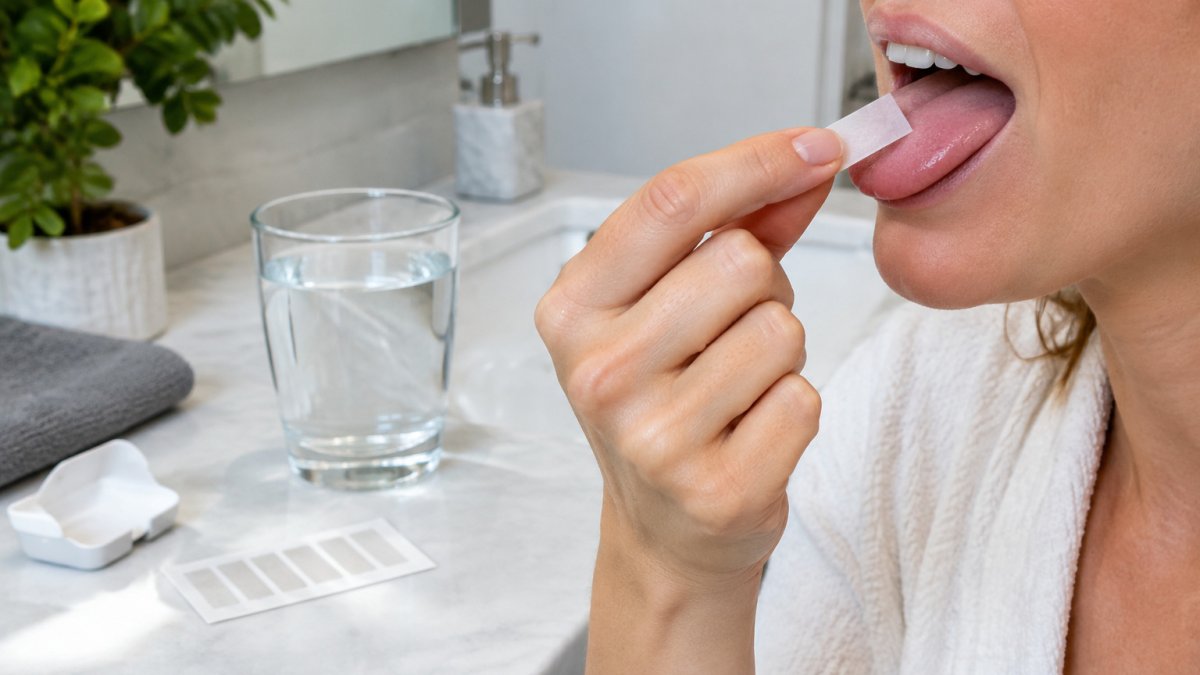
- Place the strip on your tongue, following the printed instructions.
- Allow it to dissolve completely without chewing or swallowing early.
- Swallow once the strip has fully dissolved.
- Log the day in your schedule so you stay on the cycle the label describes.
Watch out: taking more than one strip to "speed up" results is not what the labels describe. Stick to the stated daily or cycle dose.
Peptide Strip Safety and Side Effects to Discuss With a Clinician
Peptide strips are not a substitute for medical advice. FDA guidance on dietary supplements and unapproved products states that these statements have not been evaluated, and the product listings carry the same disclaimer: these products are not intended to diagnose, treat, cure, or prevent any disease.
If you take prescription medication, have a chronic condition, are pregnant or nursing, or are considering a product for a specific health concern, discuss it with a licensed clinician before starting. Keep a record of what you take and when, so the clinician can review it with you.
Many people wonder what side effects to expect. The product listings in this lineup do not describe side effect profiles, so any specific reaction should be raised with your clinician rather than assumed to be absent. Stop use and seek medical care if you notice a concerning reaction, such as difficulty breathing, swelling of the face or throat, or a severe rash.
Interactions with other medications are a specific concern. Do not combine a new strip with existing prescriptions without medical input. This is especially important for readers using sleep aids, mood-related medication, or blood-pressure treatment.
Aftercare for strips is simpler than for injections, but it still matters. If you experience mouth irritation, dryness, or a lingering aftertaste, note it and mention it to your clinician if it persists.
Accessibility and individual needs deserve attention. If you have needle fear, sensory sensitivities, or mobility limitations, a strip may be easier to use than an injection, but it still requires a consistent routine and the ability to follow label instructions. If you have difficulty swallowing or managing small objects, discuss alternatives with a clinician or pharmacist.
A practical decision guide can help: if you are unsure whether a strip is appropriate, ask your clinician or pharmacist about the product's intended use, your medication list, and any known interactions. They can help you weigh convenience against the less predictable absorption of the sublingual route.
Peptide Therapy Side Effects and Medication Interactions
Many people wonder what side effects to expect. The product listings in this lineup do not describe side effect profiles, so any specific reaction should be raised with your clinician rather than assumed to be absent. Stop use and seek medical care if you notice a concerning reaction.
Interactions with other medications are a specific concern. Do not combine a new strip with existing prescriptions without medical input. This is especially important for readers using sleep aids, mood-related medication, or blood-pressure treatment.
Choosing Your First Peptide Strip and Starting This Week
Start with the goal, not the product name. If you are interested in recovery, BPC-157 is the listing that fits. If you want antioxidant support, look at glutathione. If sleep is the concern, the DSIP blend is priced at $99.00.
Before you buy, confirm that the product fits your schedule and that you have talked with a clinician about any medication or health issue. Once you have a strip in hand, follow the label and start the cycle the same week. Shop InstaMed's current lineup to find the strip that matches your goal.
Frequently Asked Questions
What are sublingual peptides?
Sublingual peptides are peptides delivered in a form that dissolves under or on the tongue, so the compound passes through the mucous membranes of the mouth rather than being injected. InstaMed's versions are oral dissolving strips, with each strip listing a specific dose on its supplement facts panel, such as 500mcg of BPC-157 or 100mg of NAD+. Because the strips are needle-free, they suit readers who want an alternative to injectable vials, though absorption and effects vary between people and products.
Do peptide strips work as well as injectable peptides?
Peptide strips and injectable vials use different delivery routes, so they do not behave identically. Injection delivers the compound directly into tissue, while a dissolving strip relies on absorption through the oral mucosa. InstaMed does not publish head-to-head comparisons, so the honest answer is that the two formats are different products rather than equal substitutes. If you currently inject, speak with a clinician before switching to a strip.
What should I look for when choosing a peptide strip?
Start with the supplement facts: check the named compound, the dose per strip, the serving count and the recommended cycle. InstaMed's listings, for example, specify cycles such as 5 days on and 2 days off, or 12 week cycles for some products. Also check the other ingredients, since pullulan, stevia and flavour extracts appear across the range. Match the compound to your goal, and keep the product's own statement in mind that these claims have not been evaluated by the FDA.
Are sublingual peptide strips safer than injections?
Strips do not use needles. The compound itself still carries its own considerations, so safety should be reviewed individually. InstaMed's labels state that the products are not intended to diagnose, treat, cure or prevent any disease. Review your medical history, current medications and any existing conditions with a qualified healthcare professional before starting any peptide product.
